Arusha National Park: Where Mountains Meet Savannahs and Giraffes Roam Free
There’s something magical about a place that refuses to be just one thing. Arusha National Park doesn’t commit to being savannah or forest, lowland or alpine, tame or wild. Instead, this compact 137-square-kilometer wonderland embraces contradiction, weaving together ecosystems so diverse that a single morning’s exploration can take you from tropical rainforest echoing with colobus monkey calls to windswept alpine moorlands where giant groundsels grow in Dr. Seuss-like formations beneath Africa’s fifth-highest peak.
This is Tanzania’s best-kept secret—a park so close to Arusha town that you can literally see its boundaries from the airport, yet so spectacularly wild that walking safaris here feel like genuine expeditions into untamed wilderness. While other tourists rush past toward the Serengeti’s endless plains or Ngorongoro’s famous crater, those who pause here discover something equally remarkable: intimate wildlife encounters in landscapes so varied they seem curated specifically to showcase East Africa’s ecological diversity.
Mount Meru: The Gentle Giant
Mount Meru dominates everything at Arusha National Park. This 4,566-meter volcanic peak—Tanzania’s second-highest mountain and Africa’s fifth—looms benevolently over the park, its forested slopes flowing down into the protected area below. Unlike its famous neighbor Kilimanjaro, which tourists flock to in thousands, Meru remains refreshingly uncommercialized, its summit challenging but achievable, its presence adding drama to every view.
The mountain’s volcanic history shaped the park’s character. Approximately 250,000 years ago, a massive eruption blew out Meru’s eastern flank, creating the distinctive horseshoe-shaped crater and the Ash Cone that now rises within it—a volcano within a volcano, nature’s nesting doll. This catastrophic event created the diverse landscapes characterizing the park today: fertile volcanic soils supporting lush forests, the dramatic crater providing alpine environments, and ash deposits creating rich grasslands.
On clear mornings, and you must wake early for this, watching sunrise paint Meru’s slopes in shades of rose and gold while Kilimanjaro floats ethereally in the distance ranks among Tanzania’s most sublime experiences. The two mountains face each other like ancient rivals, Kilimanjaro taller and more famous, Meru more beautiful and somehow more approachable, its perfect volcanic cone unscarred by the glacial retreat afflicting its taller sibling.
Africa’s Giraffe Capital
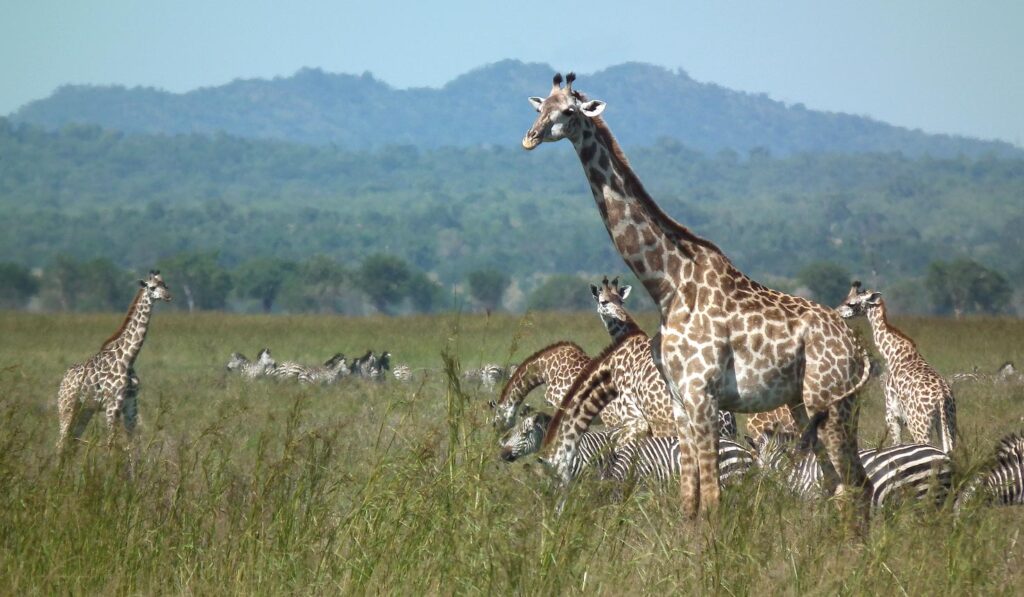
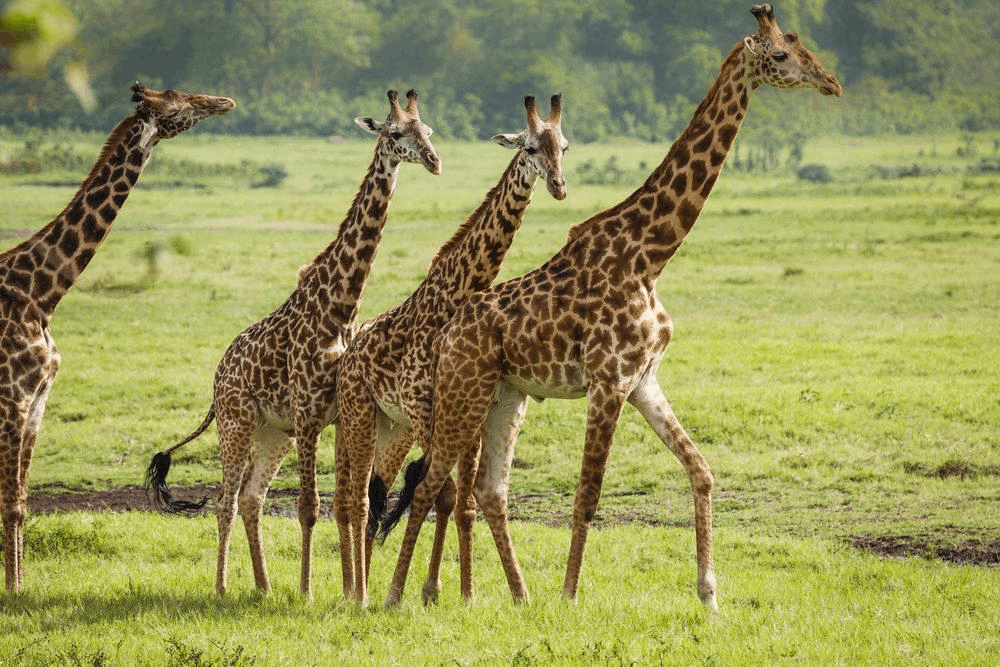
If Arusha National Park were a kingdom, giraffes would be its undisputed royalty. The park harbors Africa’s highest giraffe density—these elegant giants are everywhere, browsing acacia canopies, drinking awkwardly at waterholes with legs splayed impossibly wide, or simply standing motionless like living sculptures against mountain backdrops.
These are Masai giraffes—the subspecies endemic to East Africa, identified by their irregular, vine-like spot patterns. Watching them move combines grace with physics-defying mechanics: those impossibly long necks creating elegant arcs, legs like stilts carrying massive bodies with surprising fluidity, and those expressive faces with impossibly long eyelashes that seem designed specifically to make humans feel inadequate about their own lashes.
The giraffe concentrations mean you don’t just see these creatures—you experience them intimately. On walking safaris through the park’s open grasslands, you might find yourself unexpectedly close to a giraffe that simply hadn’t noticed your approach. The moment when it finally spots you—head swiveling down from canopy height, those enormous eyes meeting yours with mild curiosity rather than fear—creates connections impossible from vehicle-based safaris.
Baby giraffes prove particularly enchanting, their proportions somehow even more ridiculous than adults’, their coordination comically underdeveloped as they navigate legs that seem to have their own ideas about direction. Watching a youngster attempt to drink—the awkward leg-splay required to lower its head to water level—provides entertainment rivaling any wildlife documentary.
The Momella Lakes: A Palette of Blues and Greens
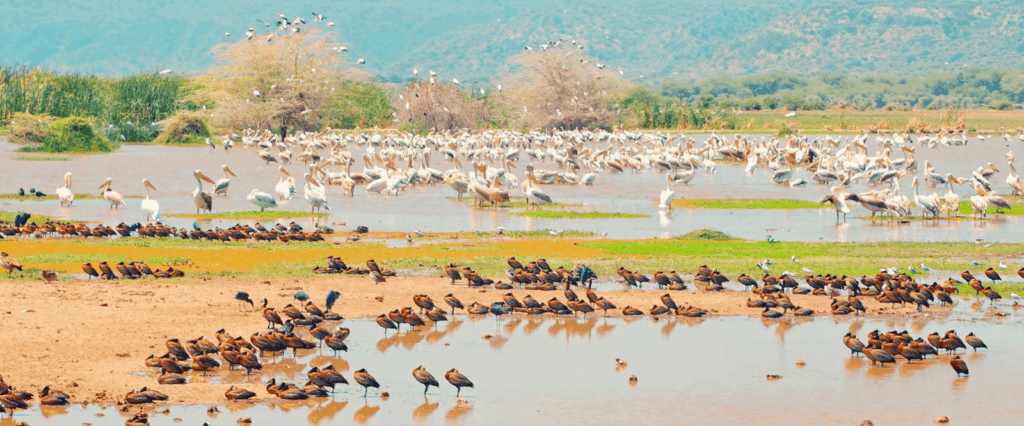
Seven shallow alkaline lakes scatter across Arusha National Park’s northern section, each reflecting different mineral compositions creating an artist’s palette of colors. The Momella Lakes—named after a Maasai word meaning “good grazing”—range from jade green to turquoise to deep blue, their hues shifting with light, season, and the particular algae blooms each lake’s chemistry supports.
These lakes attract spectacular waterbird concentrations. Lesser flamingos gather in pink congregations, their curved beaks filtering microscopic algae while creating scenes so perfectly photogenic they seem staged. Egyptian geese honk territorially, various duck species paddle placidly, and African fish eagles survey the scene from dead tree perches, their distinctive calls echoing across the water.
Hippos wallow in the larger, deeper lakes, their massive bodies barely visible—just eyes, ears, and nostrils breaking the surface. From a safe distance on the shore, watching hippo pods interact—the occasional yawn revealing massive teeth, the territorial disputes involving surprising speed and aggression—reminds you that these rotund creatures are among Africa’s most dangerous animals despite their almost comical appearance.
Walking Where Lions Once Ruled
Here’s what makes Arusha National Park truly special: you can walk here. Not on designated short trails near lodges, but genuine wilderness walking safaris covering kilometers through habitat where buffalo graze, elephants browse, and until recently, lions hunted.
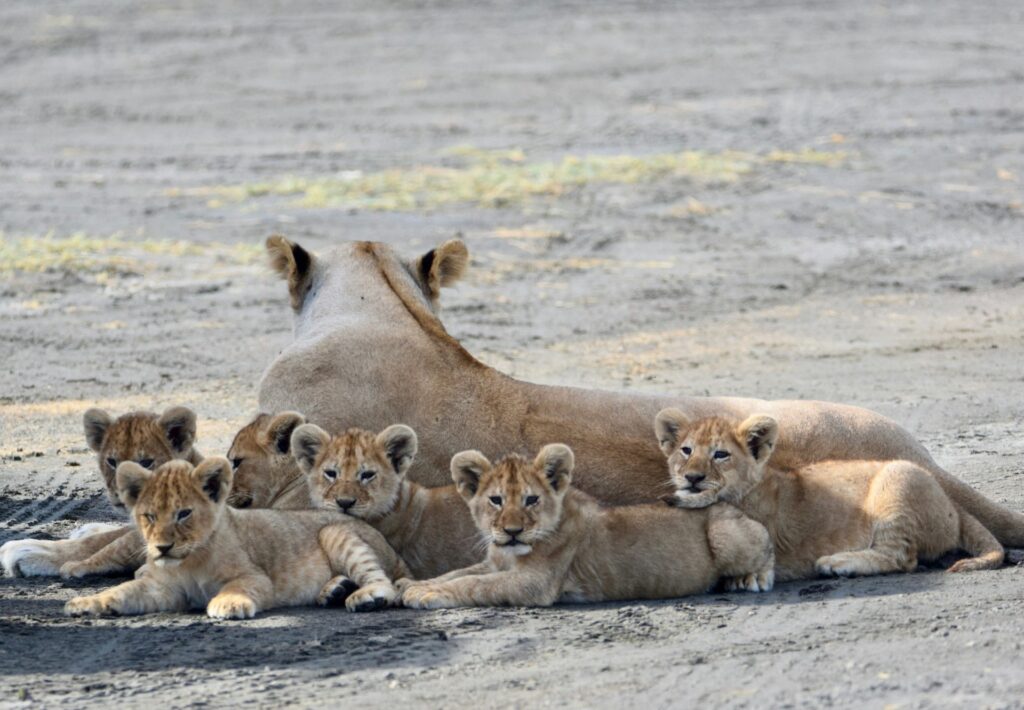
The park’s lions mysteriously disappeared in the 1990s—whether due to disease, human-wildlife conflict in surrounding areas, or simply population dynamics, nobody knows definitively. Their absence, while ecologically unfortunate, created the silver lining enabling walking safaris that would be impossibly dangerous in lion territory.
Armed rangers guide you through grasslands and forest edges, teaching tracking skills, explaining plant uses, identifying birds by call, and occasionally positioning you for close encounters with wildlife that would be impossible from vehicles. There’s something primal about approaching a buffalo herd on foot, ranger’s reassuring presence behind you, adrenaline sharpening every sense as you remember that buffalo kill more people in Africa than any other large animal.
The forest walks prove equally thrilling. Black-and-white colobus monkeys crash through the canopy overhead, their long white tails streaming behind like flags. Blue monkeys regard you with intelligent curiosity from safer distances. And occasionally—if fortune favors—you might glimpse the rare and beautiful blue monkey or even hear the distinctive call of the Narina trogon, one of Africa’s most spectacular forest birds.
Canoe Safari: A Different Perspective
Arusha National Park offers another unique experience: canoe safaris on the Momella Lakes. Paddling silently across mirror-still water as buffalo graze along distant shores, flamingos feed nearby, and Mount Meru towers above creates meditative experiences quite unlike typical safari activities.
The water-level perspective reveals details invisible from shore: hippos approaching closer than would be comfortable on land, waterbirds allowing near approach, and the play of light on water creating photographic opportunities that change minute by minute as sun angles shift and clouds cast moving shadows across the landscape.
Ngurdoto Crater: The Little Ngorongoro
The park’s southern section features Ngurdoto Crater—a 3.6-kilometer-wide volcanic caldera often called “Little Ngorongoro.” Unlike its famous larger cousin, Ngurdoto prohibits entry, preserving it as an undisturbed wildlife sanctuary viewable only from rim viewpoints.
This prohibition creates an Eden-like quality. Through binoculars from the crater rim, you observe wildlife behaving completely naturally, undisturbed by vehicles or human presence. Buffalo herds graze the crater floor’s lush grasslands, elephants browse swamp edges, and various antelope species move freely through this protected sanctuary.
Your Perfect Introduction Awaits
Arusha National Park Tanzania proves that size doesn’t determine significance. This compact paradise—explorable in a day though deserving longer—delivers experiences matching larger parks while offering unique activities impossible elsewhere.
Walking safaris. Canoe adventures. Giraffe encounters. Mountain vistas. All within an hour of Arusha town, making it the perfect introduction to Tanzania’s wildlife wonders or a rewarding conclusion to longer safaris.
Come ready for variety, intimacy, and the kind of diverse experiences that only contradiction can create.